

Social media
Puts you in front of someone who was not looking yet
A post shows your work, starts a conversation, and helps someone discover you exist. That live reach is a strength of social — not something a website should try to replace.
Local businesses in the U.S.
Short answer
Both — and they do different jobs.
Social media helps people who were not looking for you discover your work. A website helps people who are already searching find you — and trust you. If you only have profiles, you are covering the top half and skipping the bottom half, where people actually decide.
No card. Create it first and decide later if you want to publish.
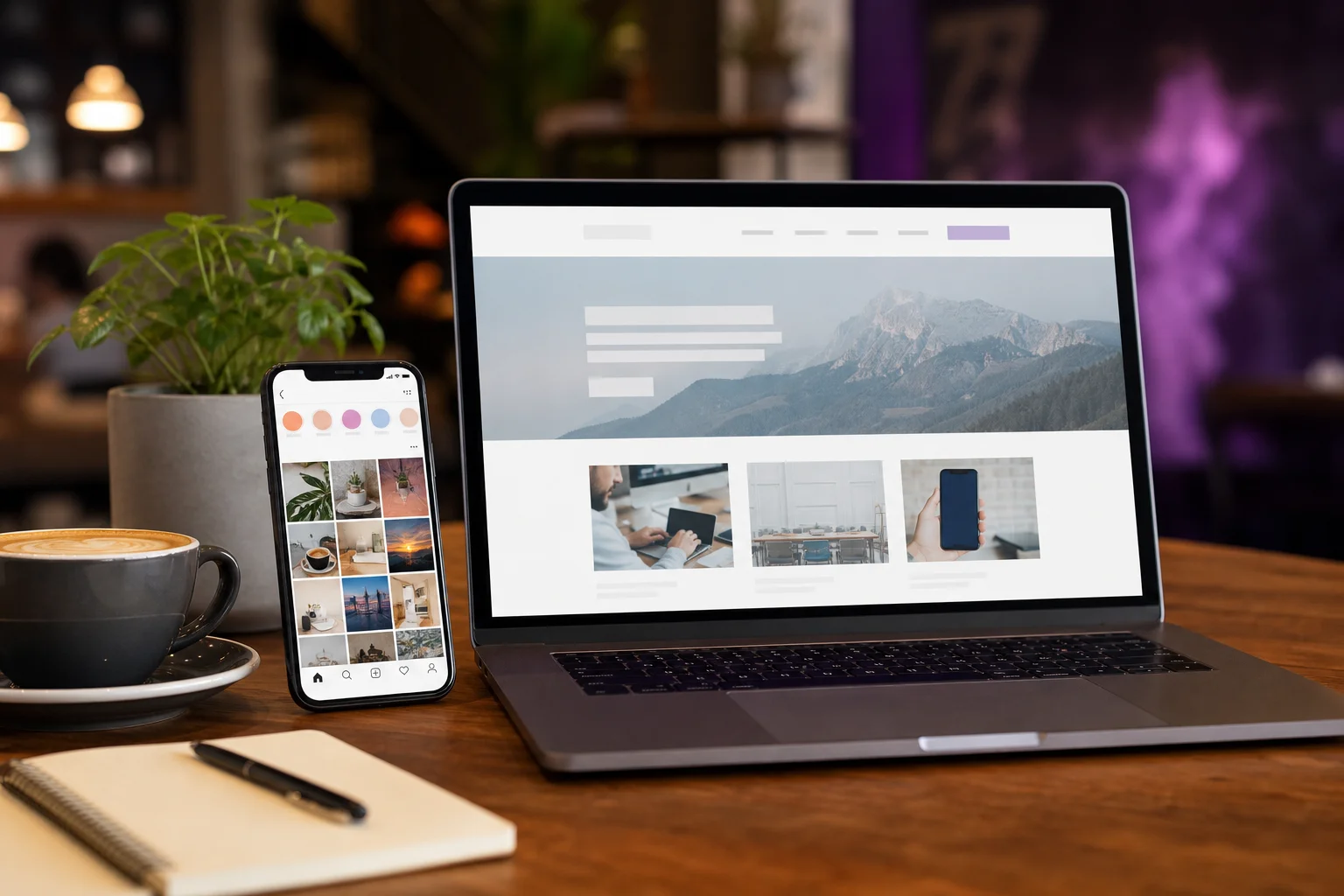
Comparison
The table is organized by job, not by product: the useful question is not which is better overall, but which handles each task. Some rows go to social on purpose.
| Job | Social media | Your own website |
|---|---|---|
| Get discovered by someone who was not looking for you | That is what the algorithm is for: putting your work in front of new people | Does not happen: nobody lands on a website by accident |
| Show up when someone is searching right nowWebsite wins | Only if they already know your name and look up your profile | That is the job: you appear on Google for what you do and where you are |
| Earn enough trust to get a call or bookingWebsite wins | Depends on what you posted this week | Services, hours, location, and who you are — always in one place |
| Post often and talk with your audience | What they do best, and a website does not replace that | Not built for that |
| Own your information without a platform in the middleWebsite wins | The account belongs to the platform; it can be suspended or hacked | Your domain and your content are yours |
| Complete your Google Business Profile properlyWebsite wins | A social profile does not count as the website field | It is the link Google asks for and what reinforces your location |
| Send one link when someone asks for detailsWebsite wins | You share a profile and they dig through posts | One link with services, pricing context, and how to reach you |
Two different moments
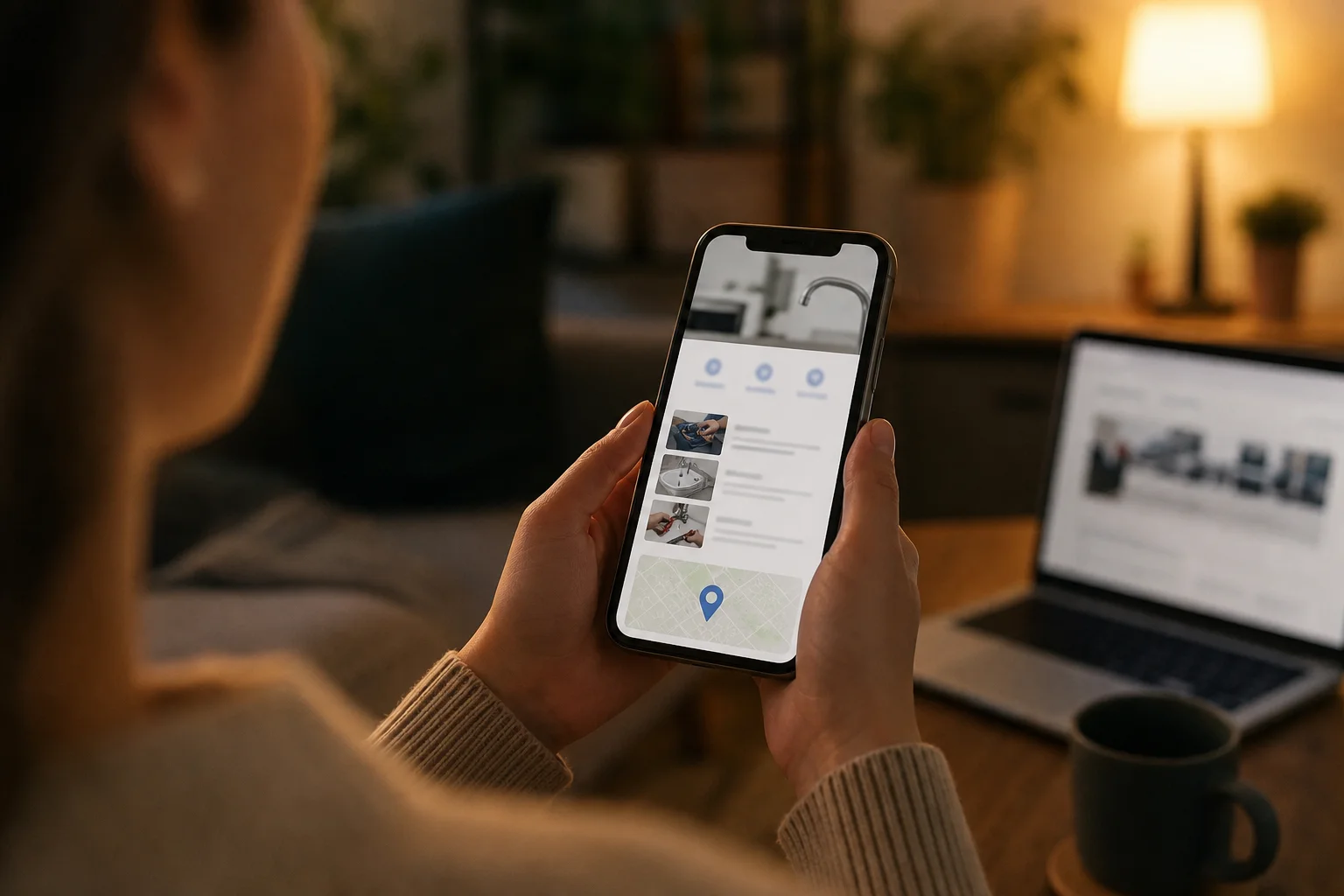
The difference is easier to see in real life: someone can find you on social and end up trusting a website that answers what they need.
Social media
A post shows your work, starts a conversation, and helps someone discover you exist. That live reach is a strength of social — not something a website should try to replace.
Your own website
Services, hours, location, and contact options live together in one link you can text or email. They decide with information, not by hunting through old posts.
Profile limits
Social is not badly built — it is built for something else. These five do not get fixed by posting more often.
Someone searching "dentist near me" or "emergency plumber Austin" is on Google, not inside Instagram's search, and they usually do not know who they want yet. A profile rarely ranks there; a website is built for it.
On social, that information lives in a post from months ago or in DMs. Many people will not ask — they leave for a competitor who made it obvious. A website states it once and stops the repeat conversation.
Account takeovers and mistaken suspensions happen on Facebook and Instagram. If your whole business lives in a profile, you can be offline overnight. Your domain is not controlled by Meta.
Your Google Business Profile — what shows on Maps — has a website field, and a social profile does not satisfy it. The profile and the site reinforce each other; that pairing matters for local "near me" searches.
A profile with a small following sends one signal; a site on your own domain with your services sends another, and it does not depend on follower count. For a customer about to prepay, that difference matters.
In favor of social
If someone tells you social is dead, they are selling you something. Three things only happen there.
It is the one thing social does that a website does not: show your work to someone who did not know you existed. No website does that on its own.
A before-and-after, a day in the shop, a free class clip. That is living content, and a weekly post beats any static page section for it.
Comments, DMs, shares between friends. Trust builds there before someone ever searches your name on Google.
Honesty
Some businesses gain nothing from one today. It is better to say that than sell you something you will stop paying for in three months.
If you already have more work than you can handle and it all comes from referrals, a website is not the urgent problem. Raising prices or hiring is.
The first months are for learning what you sell and to whom. Before that, a site would describe a business that is still changing.
If everything runs on Amazon, Etsy, or another platform and you never meet customers elsewhere, your priority is reputation inside that marketplace.
In all three cases the signal is the same: you repeat the same information in messages every day, or someone asks for your website and you have nothing to send.
Using both
Four decisions that make both channels work toward the same goal.
Want to know what it would cost? Our website cost guide has real ranges by provider type, and you can see published site examples.
Frequently asked questions
Short answers.
Yes, and that is the normal setup. They do not replace each other: social keeps doing what it does well and the site handles what a profile cannot. Most businesses use both, with the profile link pointing to the site.
They are fine for what they are — a button or a list of buttons — but neither ranks on Google for what you do, explains your services clearly, nor counts as the website on your Google Business Profile.
Traffic to a local business site is low but high intent: it is not people scrolling for fun, it is people who were already looking for exactly what you offer. Ten visits like that beat a thousand post impressions.
Followers belong to the platform, not to you: you cannot reach them outside the app and you do not control who sees each post. A website depends on neither.
With CreateWebToday you build for free and see the finished site before you decide; you pay only when you publish with your own domain. For price ranges across DIY, freelancers, and agencies, see our website cost guide.
Try it without committing
The assistant asks a few questions about your business and shows you the finished page. You decide whether it works by seeing it.
Build for free. No card. If you like it, publish with your own domain.
Create my site for freeNo card. Create it first and decide later if you want to publish.